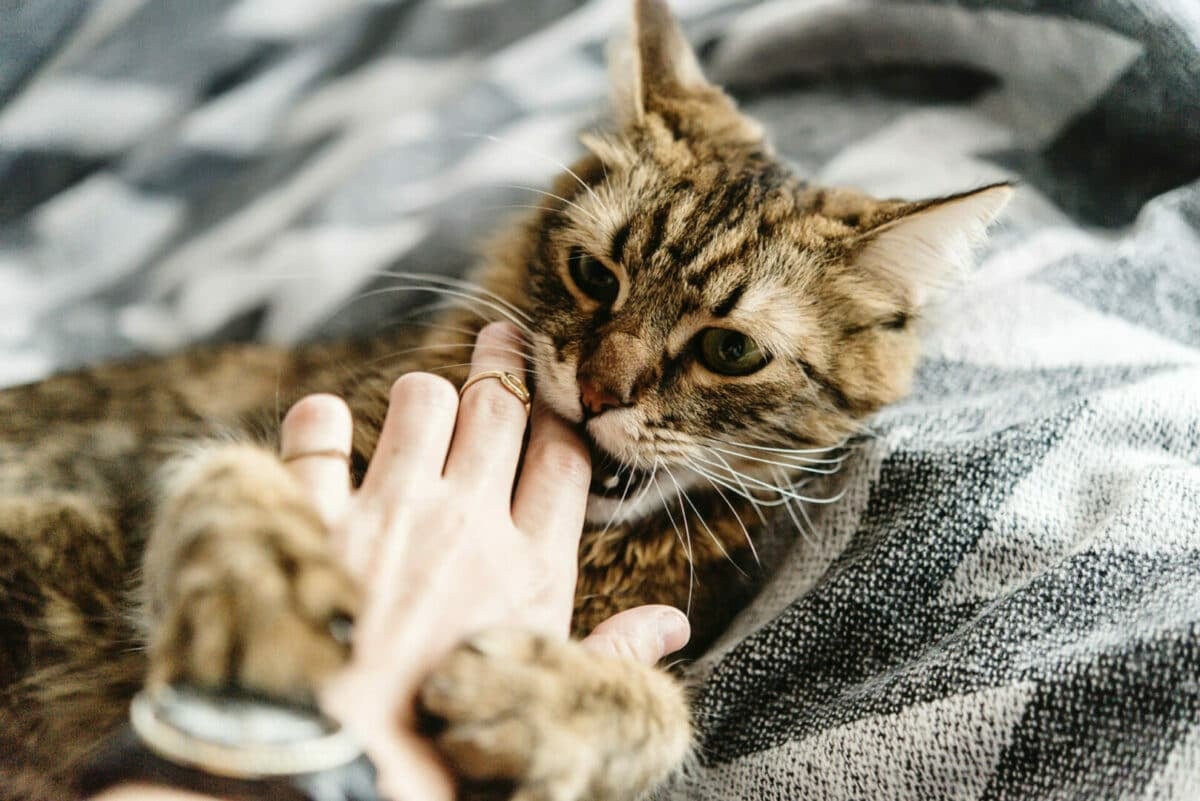
We know that cats are very observant. They watch our actions just as closely as they listen to our words. But, sometimes, we might feel as if the words we say to them aren’t being understood—especially when it comes to the word “no.” Cats will be cats, but do cats know when you tell them the word “no,”—or do they ignore us? Here, we will take a closer look if your cat understands when you tell them no or if they decide to do what they want anyway!

Your cat carefully interprets your tone of voice.
Humans often wonder if animals can understand them. When you bring a cat into your life, they learn to navigate their homes with you and look to you for food, shelter, and companionship. Your cat learns to interpret the tone of your voice with positive and negative associations. When it comes time for feedings and snacks, the tone of your voice is one they learn to understand quickly as you give into their highest demand—food!
When people wonder if cats can understand the word “no,” it’s essential to consider the scenario. When you’re saying the word “no,” think of your tone of voice. Your cat learns over time how to differentiate your words by relating them to the tone of your voice. The times when you are telling your cat not to do something, your tone will match the negative association you are saying with the word. Cats are smart and pick up on this, and they learn to associate that “no” with the naughty cat behavior you do not want them to do. Some cats will learn faster than others, and some cats just might not care as much about being on your good side. If you share your life with multiple kitties, then you know just how individualistic cats can be when it comes to their kitty cat manners.

Cats read your body language.
Body language is a big deal in the cat world. This goes for their interactions with humans as well. Cats learn to understand the words you say to them over time because they are listening to the tone of voice you’re using and your body language when those words leave your mouth. It’s likely that when you tell your cat not to do something, you are pointing your finger simultaneously or creating some action with your hands, such as clapping. Your cat will remember this and associate your hand movements with your voice. This will plant the seed in their brain that you don’t like what they’re doing and teach them not to do it.

Punishing your cat is something that you should never do. Cats are intelligent and can learn to understand “no” when spoken to them, so there’s no need to scar your cat mentally while trying to prove a point. Plus, why would you ever want to make your cat feel bad? Felines are as sensitive as they are smart, and they will learn to fear you if you scare them, and that’s something you’d never want to happen. Some pet professionals have suggested hissing at your cat when they exhibit naughty cat behavior. I’d feel a bit silly doing that, but whatever works! If anything, this will get their undivided attention.

Consistency is key when teaching your cat the word “no.”
There are many things that cats naturally know how to do. Cats are brilliant and can pick up on new things quickly, too. Positive reinforcement is a big deal in the mind of your cat. So, the best way to teach your cat no is consistency, repetition, and positive reinforcement. We know that dogs love to be praised, but you might be surprised to learn that cats are fans of praise, too.
Some will argue that cats do not possess the ability to understand this word, but if you ask me, it just means that they haven’t been taught to understand it. Cats are opportunistic by nature, so even though you think you’ve taught them not to jump on your counter, if you happen to leave the room with some tempting food on the counter, well, they might jump up there and take a bite while you’re not looking. This is not to say that they haven’t learned the word no; this is proof that cats will be cats and take it upon themselves to seize the moment if opportunity strikes. You might be telling your cat “no” the second you walk back in the room and find them tasting your food, but what will likely happen is that they’re already dashing it the second they spot you walking in because you’ve taught them this is naughty cat behavior.
While many of us might feel silly having conversations with our kitties, there are many benefits for both you and your cat when it comes to your daily conversations. Discover the many benefits of talking to your cat here on CattitudeDaily.com.