Training a young kitten is not only about obedience but it’s also about building a bond of trust and understanding between you and your furry friend. Developing this bond at an early age will set a positive tone for your relationship in the years to come. With knowledge about common kitten behaviors and communication signals, you can interact with your kitten in a more meaningful and effective way. In addition, employing positive reinforcement techniques can significantly assist you in your training. This method, which involves rewarding your kitten when they behave appropriately or follow a command, helps foster a loving environment and promotes faster learning. Moreover, it is important to teach your kitten basic commands like sit, stay, and come to ensure their safety and well-being. This journey will not only mold your kitten’s behavior but also enrich your experience as a pet owner.
Understanding Kitten Behavior
For all the fur-parents out there or those considering embracing a tiny ball of fluff into their homes, taking the time to understand kitten behavior and communication is a rewarding investment. Just like human children, kittens also have a language of their own. Understanding their behavior and communication can help you form a strong bond with your new family member, ensuring a happy and adorable journey as they transition from a kitten to an adult cat.
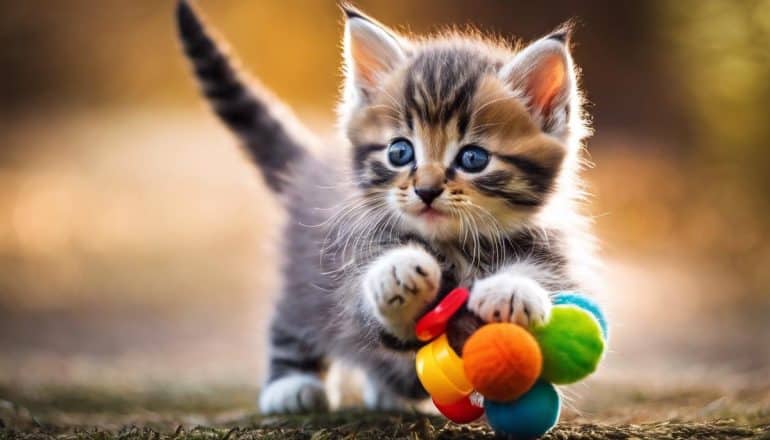
Kittens are curious by nature, and their behaviors are mostly driven by instincts to play, explore, and learn about their surroundings. A kitten’s energy level tends to be sky-high, with play sessions equivalent to strenuous outdoor adventures. While you might observe your kitten pouncing on unseen prey, stalking, chasing, and even batting at objects, these behaviors are normal. Your adorable fur-ball is developing hunting skills, essential for their growth and development.
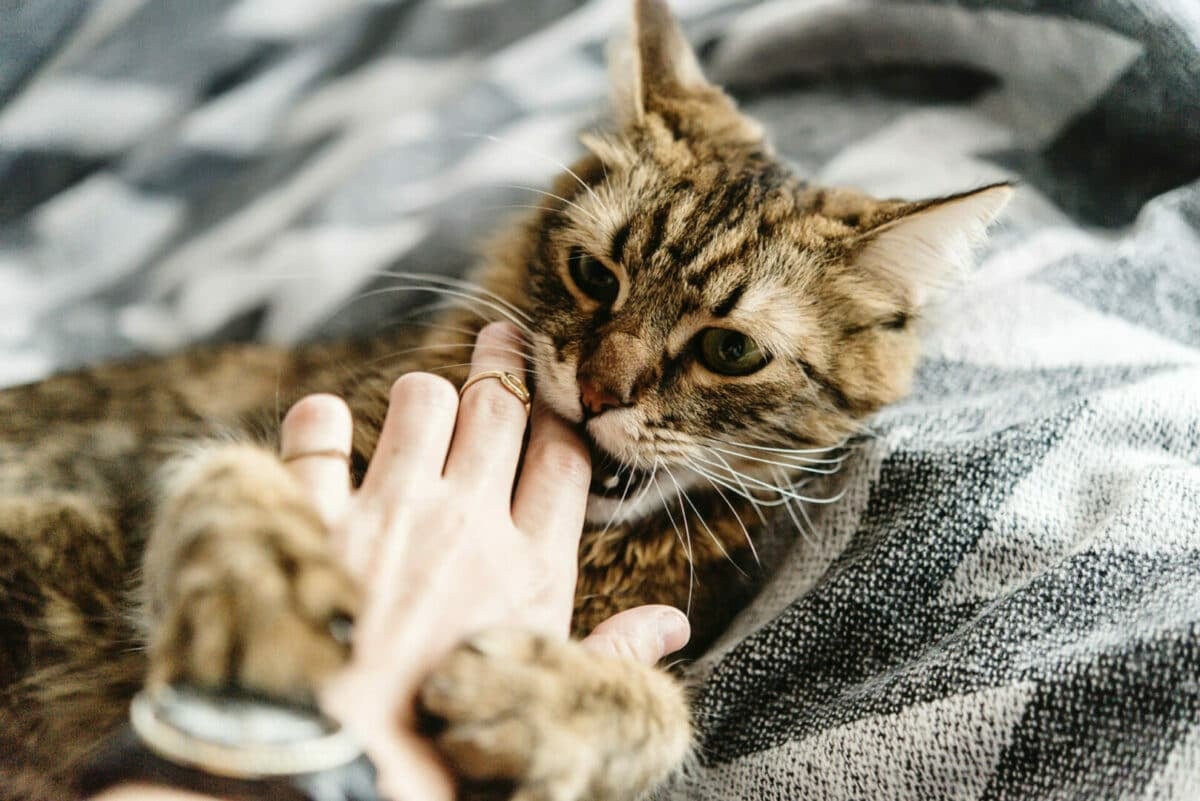
Cuddling, clawing, patting, or biting at your hands might seem endearing when they’re little, but it’s crucial to discourage this. Replace your hand with a toy during these play sessions, as it can lead to aggressive behavior when they grow up. Understand that it’s not a sign of disrespect; it’s merely a part of their learning process.
Kittens are known to knead with their tiny paws, a behavior displaying contentment and security. You’ll notice this rhythmic motion when they’re lounging on your lap or settling in for a nap. It’s a holdover from kittenhood when kneading their mother’s belly helps stimulate milk flow. This instinctive behavior remains with them and is a strong indicator of their love, trust, and comfort towards you.
Let’s dive into another adorable trait – purring! Sure, it’s often a sign of a content cat, but a purr can also be their way of asking for help when they’re not feeling well. If purring is accompanied by a lack of appetite, lethargy, or any other signs of illness, it’s essential to consult a vet promptly.
A kitten’s behavior of rubbing their face against your skin is called bunting, and it’s their way of marking territory. They have scent glands around their face, which they use to claim their humans and objects. So, when kitten rubs against you, it’s their way of expressing love, trust, and showing the world that you belong to them.
Also, a kitten’s high-energy demand means they may snack frequently throughout the day. Of course, these feeding habits will change as they grow older, transitioning into scheduled feeding times and portions.
Remember, just like children, every kitten does things at their pace, and their personalities and preferences may differ. Approach with patience, love, and some exciting toys at hand! Watching a kitten grow, understanding their behaviors, and celebrating their ‘firsts’ is a delightful journey that creates a beautiful, unbreakable bond. So, here’s to happy parenting your new fur-baby!

Positive Reinforcement in Kitten Training
Training Your Kitten: The Power of Positive Reinforcement
As much as we adore the frisky and playful nature of kittens, raising these adorable furballs requires some serious commitment. But worry not, dear parent—it’s simpler than you might think! Have you ever wondered about the most effective way to train a kitten? If yes, you’d be thrilled to explore the world of ‘positive reinforcement’.
So, what does positive reinforcement entail? Essentially, it’s all about rewarding kittens for desirable behavior—expressed through all those funny and engaging antics–to encourage repetition. Clearly, the pleasures of this little creature are boundless and can bring joy to your domestic life like nothing else.
However, you might ask, how is positive reinforcement implemented? Here are some steps you can take.
Step 1: Spot positive behaviors
Look for those behaviors that resonate with your home rules and should be encouraged. Is your kitten using the scratching post instead of the couch? Perfect. Is your furball not resisting a brush during grooming? Bravo! Identifying positive behaviors will equip you with a clear path towards successful reinforcement.
Step 2: Immediate rewards
Catch your kitten in the act of being good. The key to effective positive reinforcement is timely rewards. The moment your kitten partakes in desirable behavior—such as using the litter box correctly or calmly enjoying grooming—reward them instantly. This helps the kitten associate the positive behavior with the reward.
Step 3: Choose a reward
What does your kitten love most? Is it a scrumptious bite of its favorite canned cat food or a playful session with the feathery wand toy? Use these to reward your kitten’s positive behavior. Keep in mind, food rewards should be small and not interfere with their overall diet. Remember, the knowledge of what brings joy to your kitten can work wonders in shaping their behavior.
Step 4: Patience and consistency
Remember, neither Rome was built in a day nor was any kitten trained overnight. Maintain consistency in identifying and rewarding positive behaviors. Patience is prerequisite in parenting, and with kittens, it’s no different. It may take time for your kitten to form these habits but, with perseverance, it certainly will.
Step 5: Avoid punishment
Try not to punish or scold your kitten for unwanted behaviors. This might instill fear and create a rift between you two. Instead, redirect them gently towards the desired behavior and reward them when they switch over. A home filled with love and understanding will help your furry friend to pick up good habits quickly.
In conclusion, through introducing the sense of positivity via rewards, you can mold the behavior of your kitten and make them compatible with your house rules. The joy of raising kittens is unconditional, as is the love they give back. Embrace this journey with patience, and remember: every effort is rewarding when it’s for your beloved furball. Enjoy the cuddles and purrs, dear parent, and let the joyous symphony of life with kittens enchant your home every day.


Basic Training Commands
Teaching Commands to Your Kitten: A Guide for Loving Homes
After talking about their character traits, unique personalities, and the importance of positive reinforcement in training, it’s time to delve into some handy commands that every kitten should know. Even though cats have a reputation for being independent, all can benefit tremendously from a little bit of training. What are the key commands that every kitten should know, and how can the members of your family team up to teach them? Let’s spill the catnip!
“Eyes on Me”
Before delving into other commands, mastering “Eyes on Me” is a smart move for any kitten. This command is exactly what it sounds like – getting your fur baby to make eye contact with you, a valuable step for further training. This can be achieved by using a treat – kittens are as much of food enthusiasts as their adult counterparts! Show the treat to them, bring it towards your eyes, and say the command in a firm but gentle tone. Always remember to reward them as soon as they meet your eyes.
“Sit”
Now, while your furry friend is in tune with you – eye-to-eye, teaching them to “Sit” provides another essential behavior skill. For this, you’ll need to utilise their love for treats. Hold the treat above their heads – this will have them naturally sit down. As your kitten goes into the sitting position, say the word ‘sit,’ and once they are sitting calmly, reward them with the treat and praise them gently. With practice, your kitten will eventually understand the command.
“Come”
The “Come” command can prove extremely useful, particularly in cases of lost kittens in the house or hosting a recall during outdoor escapades. Start by squatting down to your kitten’s level and calling them with a simple ‘Come’. As your furry companion gets close, let them have a treat. Repeat this command in various parts of the house or yard to consolidate their learning.
“No” or “Leave It”
Teaching your kitten the difference between good and bad behavior is crucial for their development and your peace of mind. The command “No” or “Leave it” can help to prevent your kitten from wrecking your cozy home décor or swatting at the drapes. When you see them doing something they shouldn’t, say “No” or “Leave it” in a firm voice. Redirecting them towards their toys or play area can help reinforce the command.
No matter the command, patience, consistency, and positivity are key. While kittens aren’t typically as receptive to training as dogs, with a little bit of patience, persistence, and lots of love, you can set up your furry friend for success. Don’t forget every kitten is unique, so what might come easily to one may take others a bit longer to grasp – and that’s okay. Happy training, cat lovers! Remember, you’re doing much more than teaching commands – you’re laying the foundations for a wonderful life-long bond with your feline friend.
Effective training of a kitten is a labor of love that truly pays off in the long run. As you navigate this journey, understanding your kitten’s behavior is paramount. With this comprehension, you’re better equipped to respond appropriately to their needs and actions. Simultaneously, the use of positive reinforcement is an indispensable tool in kitten training. Remember to praise, pat, or treat your kitten when they exhibit behavior that you want to encourage. Lastly, teaching them basic commands is not an option but a responsibility. Following these guidelines, you can look forward to a beautiful and harmonious relationship with your kitten, marked by mutual respect and understanding.