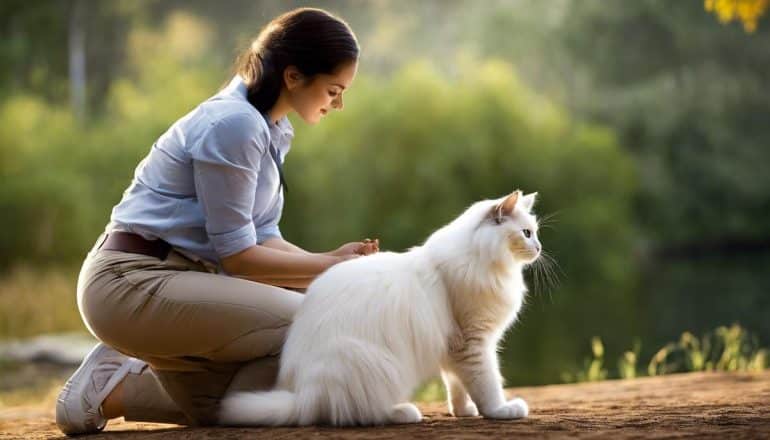
Owning a Ragdoll cat comes with the joy of experiencing their serene demeanor and affectionate company. Stepping into the world of feline companionship, particularly with such a distinctive breed, calls for a bespoke approach to nurture and guide. Understanding the Ragdoll’s unique temperament and endearing characteristics isn’t merely about appreciation—it’s the foundation for effective training. Honing in on their renowned docility and loving nature, this guide provides the tools and techniques to train your Ragdoll cat with an understanding and finesse that mirrors their gentle elegance. We embark on this journey by grounding ourselves in the transformative power of positive reinforcement—where every treat, praise, and playful moment is a step closer to the harmonious living you both deserve.
Understanding Ragdoll Behavior
Unlocking the Fluffy Secrets: Understanding Ragdoll Cat Behavior for Effective Training
Ah, the Ragdoll cat – a bundle of fluffy love with a penchant for relaxation and a demeanor that can melt the coldest of hearts. As a parent and homemaking enthusiast, it’s no surprise that our pet companions hold a special place in our family dynamic. Especially Ragdoll cats, known for their gentle temperaments and affectionate nature. But before diving into training, it’s crucial to understand their unique behavior – it’s like understanding a child’s needs for creating the best environment for growth. Here’s why:
First off, Ragdoll cats are renowned for their docile personality. They aren’t your average feline; they’re often compared to dogs because of their tendency to follow their humans around and their desire for human company. Comprehending this need for companionship is essential in training because it means that they are highly motivated by positive interactions. They thrive on praise and love, which can be wonderful incentives during training sessions.
Another noteworthy trait is their “floppy” nature – hence the name ‘Ragdoll.’ They’re famous for going limp when you pick them up, signaling their trust and relaxed state. This trait can play into training in terms of handling. Ragdoll cats often allow more handling than other breeds, which can be used to your advantage. Gentle, consistent handling can strengthen the bond and make other training, such as getting used to a carrier or grooming, that much smoother.
Then there’s their energy level. Ragdolls have a more laid-back attitude compared to other cats. They’re often content to lounge around but still enjoy a good play session. Understanding their pace is imperative. Intense, high-energy training might not be as effective as short, engaging sessions that match their relaxed vibe.
Let’s not forget their intelligence. Ragdolls are smart cookies. They can learn tricks, understand boundaries, and even master the use of a scratching post or litter tray with the right guidance. Knowing that they can be quite clever means you can use a variety of training methods, like clicker training or puzzle toys, to keep their minds engaged and responsive.
Equally important is their sensitivity. Ragdolls are sensitive souls that can sense tension and stress within the household. Keeping a calm and serene environment is vital so that they don’t become stressed themselves. Training should be a stress-free activity that’s full of positive reinforcement and gentle guidance.
Understanding these gentle giants’ behavior is the key to unlocking successful training. It’s not simply about teaching them the dos and don’ts; it’s about considering their intrinsic nature and partnering with them. Training a Ragdoll is less about command and control and more about mutual respect and understanding, fostering a harmonious relationship that’s beneficial for both the furry friend and the family it loves.
Remember, every cat is an individual, even within this breed, so while these guidelines certainly help, getting to know your Ragdoll’s personal traits and quirks is perhaps the most delightful part of the journey. With knowledge, patience, and lots of cuddles, training your Ragdoll cat can be a rewarding addition to family life.
Positive Reinforcement Techniques
Catering to a Ragdoll’s Inner Purring Engine: The Essence of Positive Reinforcement in Feline Schooling
As dedicated parents, we constantly look for the best approaches to nurture and guide our children towards blossoming into their best selves. Similarly, when it comes to our fur babies—especially those of the Ragdoll variety—positive reinforcement isn’t just beneficial; it’s essential. Let’s dive into how this method can rev up your Ragdoll’s learning and strengthen your bond.
Unlocking Success with Praise and Treats
Those who’ve experienced the joy of Ragdolls know that these cats respond to encouragement like a plant to sunlight. Positive reinforcement is all about rewarding desired behaviors which, in Ragdolls, can translate into a harmonious training experience. Whether it’s a gentle “good job!” or the crinkle of a treat bag, these gestures are like a key turning in the lock of your Ragdoll’s motivation.
Creating a Cycle of Enthusiastic Learning
There’s a certain magic that happens when positive reinforcement is a staple in a Ragdoll’s training. Every scratch behind the ear or savory morsel for a trick well-performed creates a positive feedback loop. Ragdolls begin to associate obedience and tricks with the joys of rewards and affection, fostering an eagerness to learn that is both heartwarming and effective.
Building a Bridge of Trust
One can’t mention Ragdoll training without touching on the cornerstone of any pet-and-parent relationship: trust. Positive reinforcement does more than teach commands; it builds an unspoken covenant between human and cat. Each time a Ragdoll cat receives a loving pat or a play session for following a cue, that trust swells. This isn’t just training; it’s relationship crafting.
Traversing the Tightrope of Discipline and Fun
Who says learning can’t be a hoot? Certainly not Ragdolls. While it’s important to maintain a consistent training regimen, incorporating fun activities that result in rewards is paramount. What might look like a simple game of fetch or a high-five trick to a bystander is, for a Ragdoll, a stepping-stone toward disciplined living. It’s an elegant dance between structure and enjoyment, and with positive reinforcement, every step is graceful.
Steering Clear of the Negative

Negative reinforcement can cast a cloud over any learning experience, feline or human. With Ragdolls’ sensitive natures, it’s even more crucial to avoid. The absence of negative consequences allows these cats to venture into the learning process without fear of reprimand. Steering clear of negative tactics ensures that their training sessions remain as free-flowing as their famed personalities.
Championing Your Ragdoll’s Uniqueness
Lasty, positive reinforcement celebrates the individuality of each Ragdoll. Remember, like children, no two are the same. By using this method, tailoring rewards and praise to the unique preferences of your cat reminds them—and you—that they are a one-of-a-kind member of the family. Watching them grow into their best, most well-behaved selves becomes not just an accomplishment, but a joyous journey.
As a community built on the shared love for our families, whether bound by blood or covered in fur, nurturing these beautiful bonds with warmth and positivity is a treasure. With positive reinforcement, Ragdoll training transcends routine—it weaves a story of companionship, understanding, and mutual respect. Now, imagine that velvety fur, those glistening eyes, and let the symphony of purrs be the soundtrack to a well-trained, happy, and bonded Ragdoll life.
Consistency & Patience in Training
Consistency: The Cornerstone of Ragdoll Training Success
Let’s dive into the crucial role consistency plays in training our furry, floppy friends – the majestic Ragdoll cats. As parents to these plush pals, forging a strong bond through consistent training is pivotal to our family’s harmony and our Ragdoll’s well-being.
Imagine a world where every day is different – breakfast could be at dawn, lunch at dusk, and dinner may never come. Confusing, right? That’s what a Ragdoll’s world looks like without consistency in training. By establishing predictable patterns, routines, and rules, our feline friends learn what to expect from us and what we expect from them. This reliability is the bedrock of their learning process and helps to reinforce habits.
When embarking on the training journey, a consistent approach to commands and cues is vital. If “sit” means “sit” one day but is ignored the next, our Ragdolls might as well toss it in with their toy mice – meaningless. However, if “sit” garners them praise and perhaps a tasty morsel each time, it will be as treasured as their favorite nap spot.
Timing also taps into consistency. Immediate feedback following a behavior tells your Ragdoll that what they just did was either a feline faux pas or a purr-worthy performance. The quicker the response, the more likely they are to connect the dots between action and outcome.
What about households with more than one trainer? Picture this: one person lets the Ragdoll hop onto the dinner table for a cheeky nibble, while another shoos them away. Such mixed messages are a one-way ticket to Confusionville for our furry companions. Consistency among family members fortifies the boundaries and rules, allowing our Ragdolls to sail smoothly on the serene seas of certainty.
Beyond the fundamental consistency in command, routine, and response, there’s the dimension of environment. A consistent training environment, free from chaos and bursting with peace, nurtures concentration and focus in our Ragdoll cats. Today’s distraction can become tomorrow’s bad habit if not managed with gentle, consistent guidance.
Let’s elevate consistency, embellish it with patience and persist with a regimen of love. As each day weaves into the next with dependable training sessions, we create a tapestry of trust, respect, and understanding with our Ragdoll cats. Training them is not just about tricks or manners; it’s about cultivating a relationship that thrives on mutual respect, secured through the golden thread of consistency. Together, let’s cherish every moment of this journey with our graceful Ragdoll partners, remembering that a consistent heart fosters a harmonious home.
Training a Ragdoll cat is akin to mastering an art—where the canvas is their gentle spirit and the brushes are patience, consistency, and positive reinforcement. As you apply these gentle, yet effective strokes of guidance and love in your everyday interactions, you’ll discover more than a well-behaved feline friend. You’ll unearth a deeper bond, a silent language of mutual respect and understanding that only grows richer with time. Armed with the knowledge of your Ragdoll’s character and the best practices to encourage their best self, you’re now equipped to bring out the full potential of these magnificent companions. May your shared journey be filled with the joys of discovery and the comfort of steadfast companionship as you both learn and grow side by side.