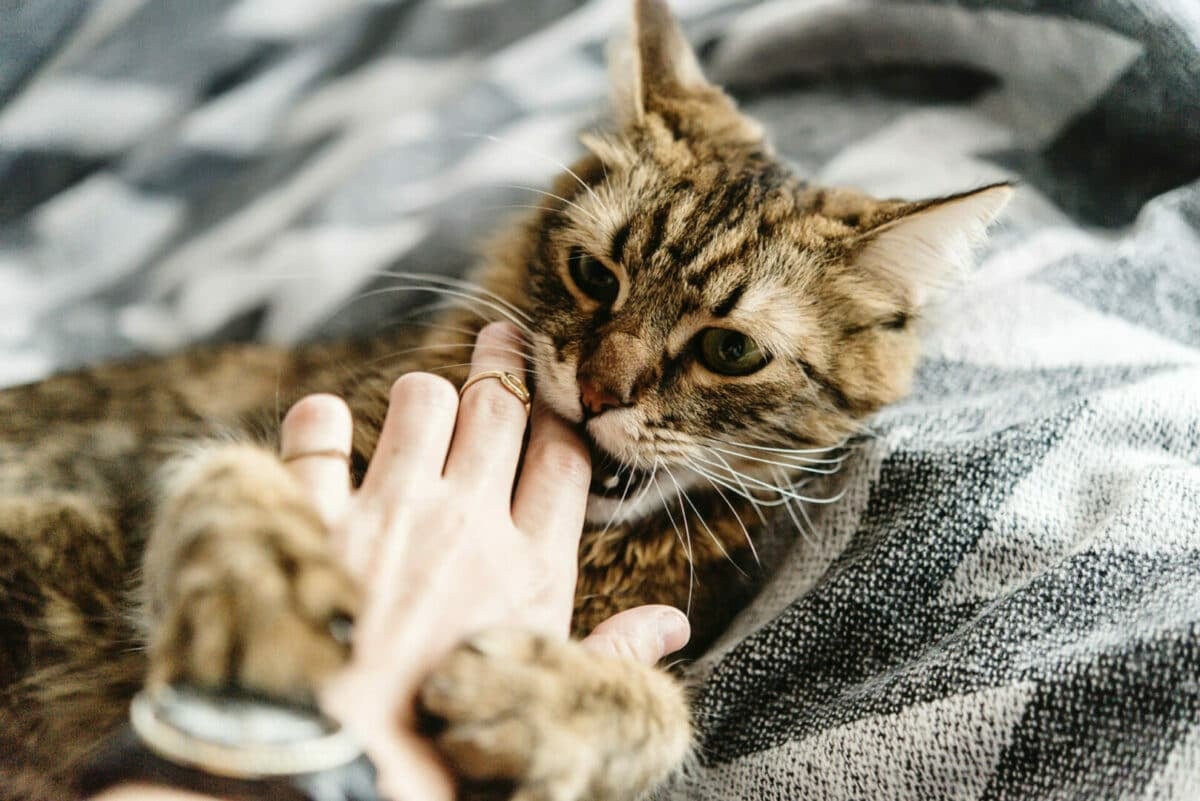
It’s an all-too-familiar scenario for cat owners: You bring home a new sofa, and your feline friend immediately claims it as their newest scratching post. Not only can this behavior be frustrating, it can also lead to costly furniture repairs or replacements. But with a blend of understanding and strategy, you can redirect this natural behavior toward more appropriate outlets. By providing alternatives like scratching posts or pads, employing harmless deterrents, and utilizing effective training techniques with positive reinforcement, you’ll not only protect your furniture but also create a happier environment for your whiskered companion.
Providing Alternatives
Preserve Your Furniture: Offer Your Cat Appealing Scratching Alternatives
Are your cherished household items, like your comfy couch or elegant drapes, falling victim to your cat’s sharp claws? Scratching is a natural and necessary behavior for cats. It keeps their claws healthy, allows them to stretch their muscles, and helps them mark their territory. Rather than discouraging this instinctive action, you can direct it towards more appropriate items. Here’s how providing alternative scratching options can save your furniture and satisfy your cat’s scratching needs.
Understanding the Feline Scratch-entials
Before diving into solutions, it’s crucial to comprehend why cats scratch. This behavior has a few key purposes, which include nail care, territory marking, stretching, and stress relief. Recognizing these facts allows you to offer your cat better alternatives that meet these innate needs.
Selecting the Right Scratching Posts
- Variety is Key: Just as humans have diverse tastes, so do cats. Offer a mix of scratching options in terms of material, size, and orientation (vertical and horizontal). Common materials include carpet, sisal, wood, and cardboard.
- Stability Matters: Cats put a lot of energy into scratching. Ensure that any post is stable and won’t topple over during use. A wobbly post can turn a cat off for good.
- Location, Location, Location: Place scratching posts in strategic areas where your cat likes to scratch or where they spend most of their time. Cats often scratch when they wake up from a nap, so consider placing a post near their favorite snoozing spot.
- Height is Important: Many cats like to stretch fully when they scratch. Look for posts that allow them to reach upwards as far as they can or lay out flat for a good horizontal stretch.
Promoting the Scratching Posts
Simply setting up a scratching post isn’t enough—you need to make it the most attractive option for your cat.
- Infuse With Catnip: A little catnip goes a long way. Sprinkle some on the new scratching posts to attract your cat’s interest.
- Play Around It: Use toys to lead your cat to the scratching post during playtime. This can help them associate the post with fun and positive emotions.
- Praise the Paws: Whenever your cat uses the scratching post, offer plenty of praise. Treats can work as an excellent incentive for repeated behavior.
- Redirect Gently: If you catch your cat in the act of scratching furniture, redirect them without scolding. Place them near the scratching post and use a feather toy or a string to simulate scratching motions.
Discouraging Furniture Scratching
While you’re encouraging the use of scratching posts, it’s also helpful to make your furniture less enticing.
- Use Cat Scratch Tape: This double-sided tape can be applied to furniture. Its sticky texture is unappealing to most cats.
- Cover Up Temporarily: Use furniture covers or throws over the areas your cat targets. Remove them gradually as they get used to using the scratching posts.
- Scent Deterrents: Cats have strong noses. Natural deterrents like citrus scents sprayed on furniture can discourage scratching.
Continuous Practice Leads to Progress
Remember, changing behavior takes consistency and patience. Keep encouraging and praising your cat for using the scratching posts, consistently offering a variety of options, and keeping the posts in prime locations. With persistent effort, your furniture can remain pristine, and your cat can enjoy a satisfying scratch.
Using Deterrents
Keep Your Furniture Flawless: Practical Cat-Proofing Strategies
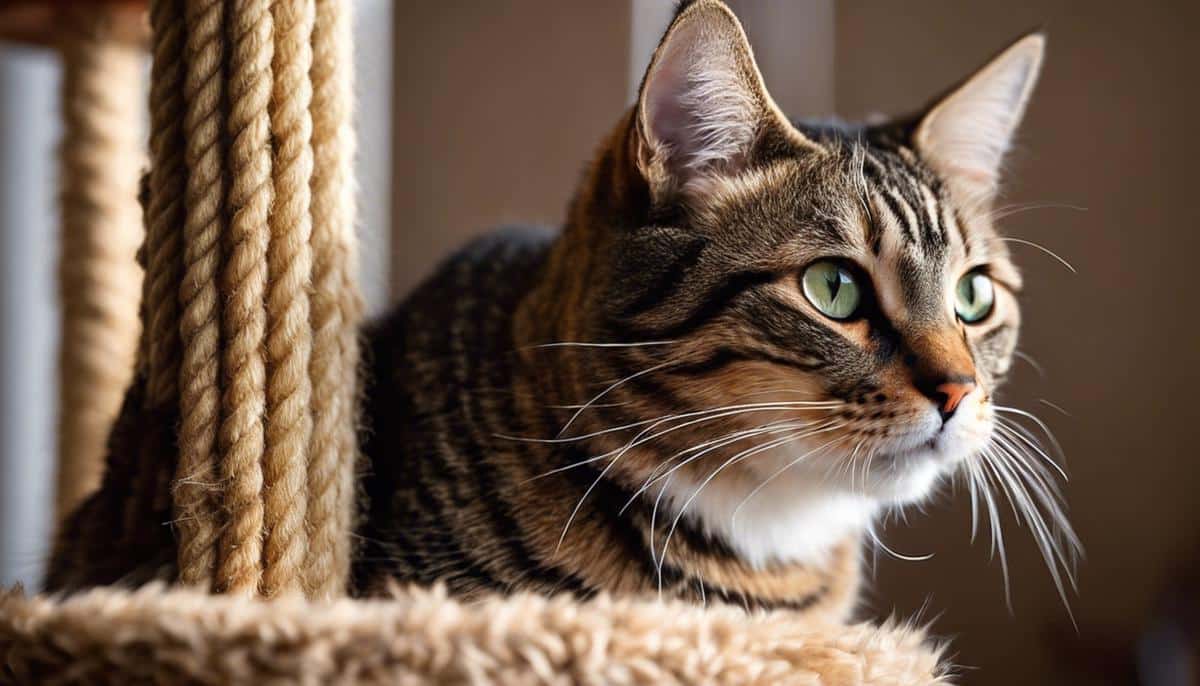
Every cat caretaker knows the struggle of maintaining pristine furniture amidst our feline friend’s innate need to scratch. While we’ve delved into understanding this behavior and directing it towards appropriate scratching posts, there’s more to be done for safeguarding our beloved sofas and chairs. Here, we focus on additional, harmless deterrents that keep cats from using furniture as their personal manicure stations.
Strategic Furniture Placement and Blocking Access
Sometimes, the simplest strategies prove the most effective. Observe which furniture your cat targets, and consider rearranging your space to make these pieces less accessible. Moving a favorite scratching spot away from the cat’s usual route can be surprisingly effective. Additionally, try to block access to these pieces by using obstacles—think plant stands, side tables, or even temporarily placed room dividers. It’s a way of gently nudging your furry pal toward their designated scratching territory.
Double-Sided Tape: The Sticky Guardian
Cats typically detest stickiness on their paws, making double-sided tape an excellent ally in protecting your furnishings. Apply strips to the areas most frequented by your cat’s claws. The uncomfortable sensation encourages them to retreat and seek out a more pleasing texture—ideally, the one offered by their scratching posts. While you’ve likely used scratch-specific tapes, don’t underestimate broader usage of double-sided varieties that can adhere to any surface needing protection.
Plastic Protectors: A Clear Solution
While covering furniture can sometimes create an eyesore, plastic protectors offer an unobtrusive method to shield fabric from claws. These clear sheets are easily affixed to the corners or sides of furniture, preserving the aesthetic integrity of your home while delivering a gentle deterrent. Cats find the smooth surface unsatisfying to scratch, redirecting them to find rougher, more claw-friendly alternatives.
Motion-Activated Devices: The Invisible Sentinel
For the tech-savvy, motion-activated deterrents provide a modern solution. These battery-operated devices detect your cat’s movement near the off-limits furniture and respond with an action—be it a startling sound, a puff of air, or a burst of citronella—that safely discourages the behavior. Place them strategically around the furniture’s perimeters, and your cat will likely decide it’s in their best interest to keep a respectful distance. Be mindful to use these devices as a temporary training tool to avoid stressing your cat unnecessarily.
Aluminum Foil: A Do-It-Yourself Shield
Aluminum foil isn’t just for the kitchen—it’s an ally in the fight against furniture scratching. The foil’s texture and crinkling noise are off-putting for most cats when placed over their usual scratching haunts. Drape sheets over targeted areas and secure them if needed. This method is a no-fuss, inexpensive way to maintain the integrity of your furniture while steering your cat away.
Training Pads with a Twist

Training pads imbued with scents that repel cats can be placed around furniture to form a scent barrier. Alternately, if you prefer DIY approaches, create your own pads by adding a few drops of a cat-safe deterrent essential oil, like lavender or eucalyptus, to regular pads or cloths. However, always ensure the essential oils used are safe for cats and diluted appropriately to avoid any adverse reactions.
In cultivating a harmonious living space for both you and your feline family, it’s crucial to integrate these harmless deterrents thoughtfully. Each approach respects your cat’s natural behaviors while setting clear boundaries in a loving, safe environment. Coupled with patience and positive reinforcement, these methods are a surefire way to maintain both your furniture’s integrity and your cat’s happiness. Through consistent efforts, your home can be a testament to the tranquility and respect that flourish when human meets cat.
Training and Positive Reinforcement
Redirecting Scratch-tastic Feline Energy: Positive Reinforcement Techniques
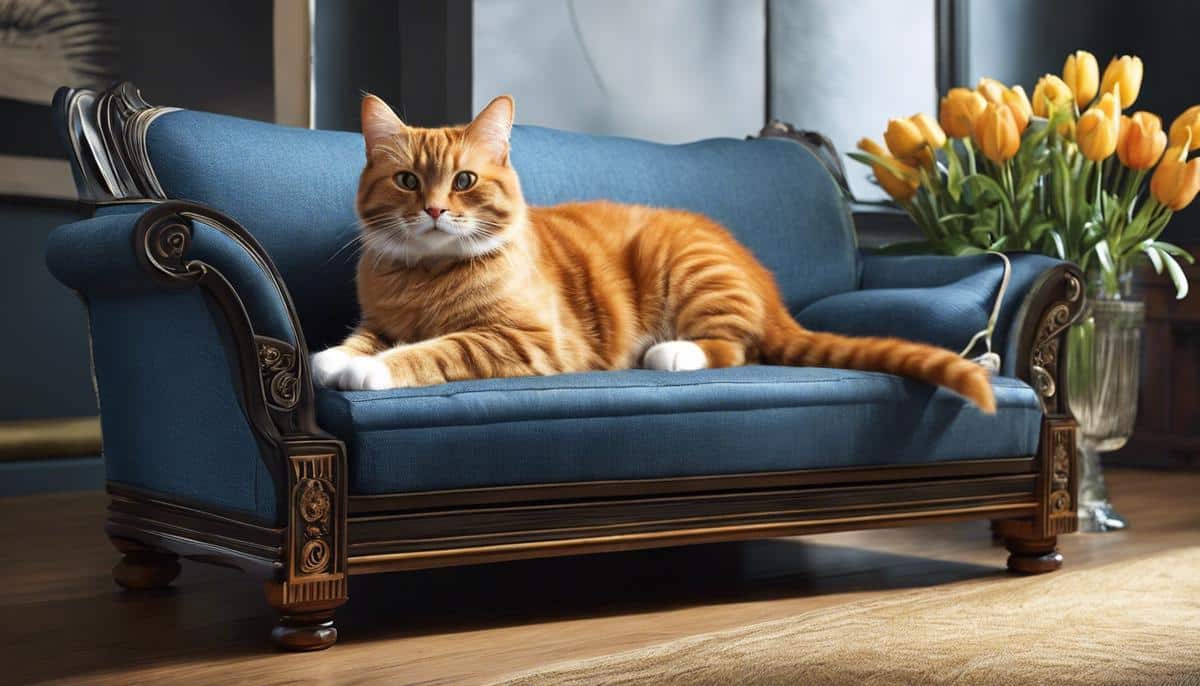
Capturing a cat’s attention and guiding it towards appropriate scratching behavior falls squarely within the realm of positive reinforcement—an approach that rewards desired actions to encourage repeat performances. Here’s how to harness this powerful tool and teach your feline friend to focus their natural scratching instincts on suitable objects, rather than your beloved furniture.
Positive reinforcement isn’t just about giving treats; it’s founded on the premise of rewarding any behavior you want to encourage. When it comes to scratching, the aim is to make the act of scratching the designated object so satisfying that your cat can’t help but return to it.
Step 1: Observe and Reward
Note the times your cat usually likes to scratch. Just after a nap, or perhaps after a meal? Place them gently by the scratching post during these peak times. When they stretch up and pull those claws through the material—jackpot! It’s treat time. Praise, cuddle, or a favorite game—we’re aiming for a connection of joy and that post.
Step 2: Make it Irresistible
Catnip or silver vine can be a siren call for cats. Sprinkle some on the scratching post or hang toys from the top. The allure of the scent or the challenge of the dangling prey will lead your cat to the post. Once they give it a claw, make sure you’re there to cheer them on with positive affirmations.
Step 3: The Power of Sound
Clicker training isn’t just for dogs. A clicker can be a precise way of marking the exact moment your cat does something right. Claw meets post, click goes the device, and a treat follows. With time, this sound becomes synonymous with incoming rewards, cementing the behavior.
Step 4: Gradual Steps Lead to Great Leaps
If scratching the post seems too big a jump for your whiskered companion, start small. Encourage them to touch the post with a paw first, reward, then step it up to a gentle scratch. Build up the behavior incrementally and they’ll soon be shredding with gusto—where you want them to.
Step 5: Consistency is Key
Inconsistency is the quickest way to confuse a feline student. When they scratch correctly, they need the same happy response from you every time. Whether morning or midnight, praise and treat. This consistency fortifies the association between the behavior and the reward.
Step 6: Instant Gratification
Timeliness is crucial in positive reinforcement. The reward must follow the action as quickly as possible—ideally within seconds. This instant payoff engraves in their mind that scratching the post is the straight line to the good stuff.
Remember, cats aren’t consciously trying to be destructive—they’re just following their instincts. Positive reinforcement is about rerouting those instincts to activities that both you and your cat can feel good about. With each small victory and subsequent reward, the designated scratching post becomes a beacon of feline satisfaction. It’s not just about deterring unwanted behavior, it’s about cultivating an environment where both pet and pet owner can thrive harmoniously.
Keep at it, mix it up with treats, attention, and play, and watch as your cat transforms into a model of purr-fect scratching etiquette.
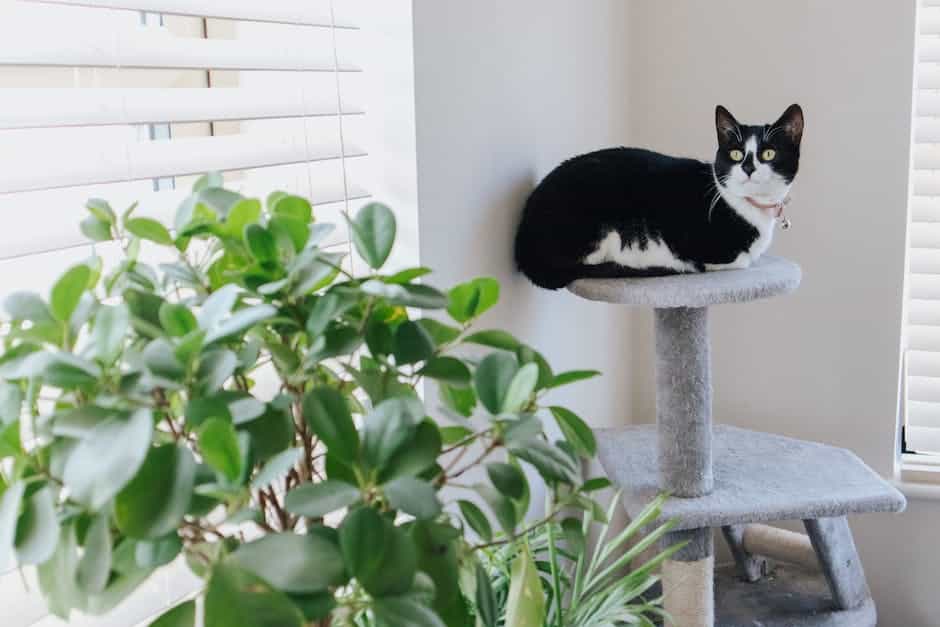
Transforming your cat’s scratching habits doesn’t happen overnight, but with the right approach, it can be a smooth process that strengthens the bond between you and your pet. Remember, scratching is a healthy and instinctual activity for cats, so offering them proper alternatives and consistently encouraging their use will lead to the best outcomes for all. As you merge patience with these methods, you’ll soon see your cat embracing their new scratching zones, allowing both your furniture and your feline to coexist in harmony.