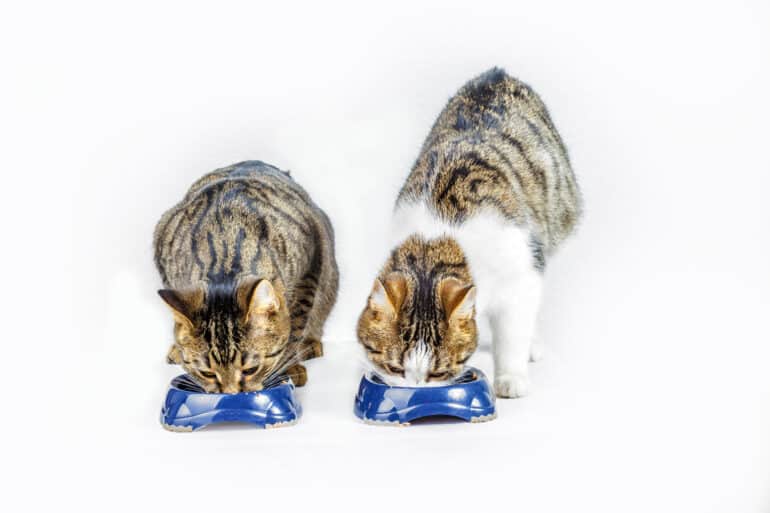
According to the VCA Animal Hospital, the food you give your cat is the most significant factor you can control to provide them with optimal health. Your cat’s diet should change as they move through each stage of its life cycle. You should feed your cat differently in the different stages of their life; kitten, adult, senior, and geriatric.
However, when you have many cats, each at different life cycle stages, feeding time can become quite a pickle.
If you’re struggling to keep your cats’ food separate, keep reading. This guide has the best tips for feeding multiple cats on multiple diets.

Why Do Some Cats Require Different Diets?
Many factors can influence your cat’s food and what they need to get their daily nutrients and maintain a healthy weight. Some of these factors are as follows:
- Age – If your cat is a kitten or a senior cat, they will require different foods than an adult cat. The food your cat needs to maintain a healthy diet depends entirely upon where they’re at in the cat life cycle.
- Fussy eating – If your cat is a bit of a fussy eater, they may only eat a certain kind of food. If you have other cats, you must ensure they do not eat your fussy cat’s food and that they stick to their meals.
- Allergies – if your cat is allergic to an ingredient in cat food, then it is essential to provide them with food that doesn’t contain it. It is also vital to ensure they don’t eat your other cats’ food, which may include the ingredient they are allergic to. You might consider making your own cat food that all your cats can enjoy, and avoid the costly allergen-free cat food brands.
- Weight issues – If your cat struggles with obesity, they may need a special diet to help them lose weight. Since 60% of cats in the US are overweight, one of your cats could likely struggle with weight at some stage in life.
- Medical Issues – If your cat has a medical issue, they could be required to eat a specific medicinal food, which you don’t want your other cats to eat. Medicinal food can be pretty pricey, so it makes sense that you would feed your other cats a cheaper alternative.

Tips For Feeding Multiple Cats On Multiple Diets
Now we know some of the reasons you should keep your cats’ food separate at mealtimes; let’s look at some of the best tips and solutions for managing mealtimes effectively to keep your cats’ diets separate.
Keeping Mealtimes Calm
We suggest that one of the best ways to ensure your cats eat their food and nobody else’s is to keep feeding times calm.
Having your cats wait patiently for their food and sit quietly while preparing their meals allows you to assign each cat to their bowl with ease at feeding time and avoid a frenzy. Feeding your cats at regular times can help quell their excitement and impatience when it comes to their next meal.
You can train your cats to wait in a specific spot by using a clicker and treats to reward them for waiting patiently. Or, you could keep your cats busy with treats and a food puzzle to ensure they don’t bother you while you’re preparing their meals.

Using Microchip Feeders And Cat Flaps
Though this is an expensive option, it is very effective. You can use microchip feeders to ensure your cats can only access their food and no one else’s. Or, you could set up each cat’s bowl in a different room and have microchip cat flaps put on the doors in your house to ensure your cats can’t get to each other’s food, only their own.
Feeding Your Cats On Different Levels
If you have senior or overweight cats that require a special diet, you can try putting the regular cat food on a countertop. Your young and healthy cats will be able to jump up and get to their food, while your overweight or senior cat will have to eat their food on the ground. Using vertical levels for feeding is an inexpensive and straightforward solution for keeping your cats’ meals separate.
Supervising Mealtimes
Perhaps the simplest solution, supervising your cats’ mealtimes, is the best way to ensure your cats eat the food that is meant for them. You can place your cats’ bowls in each corner of the room and position your cats manually by picking them up and placing them in front of the suitable bowl. However, if your cat doesn’t like its medicinal food or diet food, they may be persistent in their attempts to reach the other bowls, which could be frustrating.

Summary
Keeping your cats’ food separate can be a nightmare, but it is a necessary evil. To keep your cats in good health, you need to feed them according to age, allergies, and any medical issues they may have. Hopefully, with these tips, you will find that mealtimes become more straightforward, and your cats get into their new eating routine with ease.
About the Author
Pet expert Anna has spent 20 years following her passion for animals as a writer and editor in the pet publishing industry. Prior to starting her career in publishing, Anna spent eight years working in veterinary hospitals where she assisted veterinarians as they treated dogs, cats, rabbits, pocket pets, reptiles, birds and one memorable lion cub. She lives in Southern California with her husband, two sons and miniature poodle Jäger.