
The health of our feline companions is a tapestry woven from various strands––behavioral patterns, physical health parameters, nutrition, and dedicated preventive care. As responsible pet guardians, it is essential to recognize the vibrant threads that signify a thriving cat, from the way they pounce and play to the sheen of their coat. Understanding the behavioral patterns indicative of well-being is the starting point for grasping the essence of their overall health. It allows us to discern the subtleties of their interactions and daily routines which, when consistent, shine a spotlight on their inner vitality. Physical health is equally telling, with the condition of a cat’s coat, teeth, eyes, and ears providing tangible clues to their well-being. Simultaneously, nutritional intake casts a long shadow over their health, with robust digestive functioning acting as a testament to their diet’s adequacy. Lastly, no portrait of feline health could be complete without the foundational layer of preventive care, which, like a vigilant guardian, protects against a spectrum of potential health adversaries. Embarking on this journey of awareness, let us delve into the nuanced world of our cat’s health, a domain where vigilance is synonymous with love.
Behavioral Patterns Indicative of Well-being
In the canonical framework of feline ethology, the typical behaviors of a healthy domestic cat (Felis catus) are keenly observed in various contexts: individual activity, social interaction, and environmental engagement.
A quintessentially solitary hunter by lineage, a healthy cat displays an array of behaviors symptomatic of its well-being and inherent predatory instincts.
These include the regular partaking in intricate grooming rituals, known as allogrooming when involving conspecifics, which serve not only in maintaining fur cleanliness but also in affirming social bonds and hierarchies within a clowder, the term ascribed to a group of cats.
In addition to grooming, characteristics indicative of an optimal health status in a cat are a proclivity for ample sleep and a protracted repertoire of play behaviors, echoing the preeminent predatory practices of their ancestors.
Play is not merely an outlet for surplus energy but is an instrumental behavioral facet in refining the intricate skills necessary for survival.
A healthy cat will habitually engage in play, simulating hunting through stalking, pouncing, and capturing toys or other inanimate objects.
This not only fosters their physical dexterity but also underpins cognitive development and emotional contentedness.
Furthermore, the healthy cat will maintain a regular feeding schedule with discernible voracity and pointedly abstain from irregular elimination behaviors.
As territorial animals, cats will exhibit marking behaviors, such as scratching to keep their claws in prime condition and to deposit olfactory cues that territorially delineate the environment to their favor.
Such behaviors, when observed to occur with systematic regularity and devoid of excessive compulsion, are indicative of a well-adjusted cat in prime health.
Ultimately, these entrenched behaviors pave the path for a holistic understanding of the domestic cat’s health and welfare, mandating observant guardianship and responsible stewardship from their human counterparts, who must ensure the conditions for these behaviors are optimally fulfilled.

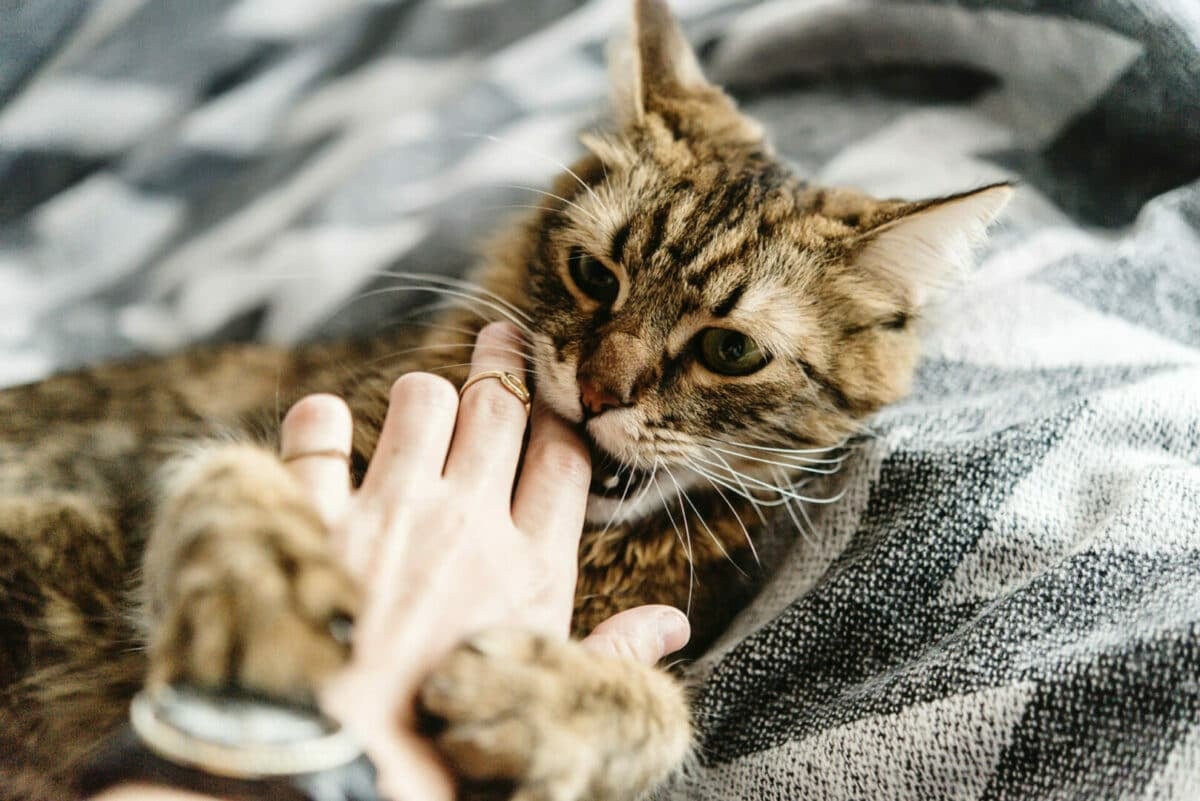
Photo by clemono on Unsplash
Physical Health Parameters
Assessing the physical health of domestic felines necessitates careful observation and a baseline understanding of key health indicators. Notable among these indicators is body condition, a critical metric for evaluating feline well-being. A cat’s body condition is often assessed through palpation of the ribs and visual assessment of waist contours in comparison to standardized body condition charts. An underweight cat might have protruding ribs and a severe abdominal tuck, while an overweight cat could present with no visible waist and palpable fat deposits. Both extremes hold potential health implications, such as increased risk of metabolic disorders in obese cats, and compromised immune function in undernourished ones.
Further to this, one must examine the coat and skin condition for signs that could indicate nutritional deficiencies or underlying health issues. A healthy cat typically boasts a sleek, smooth coat without excessive dandruff or bald patches that could signify parasitic infestations or hormonal imbalances. Furthermore, the hydration status, another vital indicator, can be quickly gauged by the elasticity of the skin; gently lifted skin on the scruff should snap back into place readily in a well-hydrated cat.
Finally, the routine observation of a cat’s litter box habits can uncover early signs of illnesses — for instance, changes in the frequency, volume, or appearance of urine and feces could herald conditions ranging from urinary tract infections to systemic diseases. As empirical as these methods may seem, it’s paramount to remember that this information serves as a first line of insight prompting the need for veterinary evaluation and should not be misconstrued as a definitive diagnosis.

Nutrition and Digestive Health
Nutrition plays a quintessential role in the overall health of domestic cats, influencing not only their physical well-being but also their behavior.
The assessment of a cat’s body condition is a fundamental aspect of nutritional oversight that aids in preventing obesity, as well as in identifying malnutrition.
Palpation of the ribs and visual examination of waist contours provide indispensable tactile and visual cues for determining optimal body weight.
Adequate body fat cover is essential — the ribs should be palpable with a slight fat cover, and the waist should show behind the ribs when viewed from above.
Both underweight and overweight conditions in felines carry substantial health risks, including but not limited to diabetes, hepatic lipidosis, and osteoarthritis.
The condition of a cat’s coat and skin offers valuable insights into its nutritional state and health.
A lustrous coat and supple skin typically suggest adequate nutrition, whereas dull hair and flaky or oily skin may indicate deficiencies or excesses in essential nutrients such as vitamins, minerals, and fatty acids.
Moreover, the examination may reveal more insidious issues, such as parasitic infestations or hormonal imbalances, often requiring a deeper investigation.
Consistent hydration is critical, as evidenced by skin’s elasticity—when gently pinched and released, the skin should promptly return to its original position, indicating a well-hydrated cat.
Routine observation of litter box habits is instrumental for early detection of nutritional and health problems.
Changes in urine or feces, such as alterations in volume, consistency, or odor could signal underlying health issues potentially related to the diet or symptomatic of illness.
It is incumbent upon caretakers to be vigilant and seek veterinary evaluation when deviations from normal are observed, underscoring the profound importance of an alert and informed approach to ensuring the nutritional well-being and overall health of feline companions.

Preventive Care Measures
The critical examination of a domestic feline’s coat and skin offers invaluable insight into its overall health status. A robust and lustrous coat, alongside supple skin, typically signifies appropriate nutrition and the absence of underlying health conditions. Conversely, a dull, brittle coat or flaky skin may be the harbingers of nutritional deficiencies or health issues. Equally telling is the presence of ectoparasites or manifestations of hormonal imbalances, which often require prompt medical attention. The conscientious observer can detect these signs and seek veterinary advice to mitigate any burgeoning health complications.
Furthermore, maintaining optimal hydration is essential for the physiological processes of a cat. The elasticity of the skin can serve as a heuristic gauge of adequate fluid intake; poor skin turgor may be suggestive of dehydration, prompting a reassessment of water accessibility and consumption patterns. Additionally, diligence in the monitoring of litter box usage facilitates the early detection of potential illnesses. Changes in urinary or fecal output, such as altered frequency, consistency, or coloration, may be preliminary indicators of systemic disorders. This routine observation, albeit seemingly mundane, can precipitate timely veterinary intervention, averting the progression of disease and safeguarding the well-being of the cat.
Ultimately, inferences drawn through vigilant and informed observation of a cat’s physical and behavioral patterns catalyze the preventive care process by revealing deviations from the norm. These observations can potentiate the necessity for veterinary evaluations, leading to early diagnoses and fostering proactive healthcare strategies. Therefore, attentive guardianship rooted in understanding the aforementioned signs is paramount in nurturing and sustaining the health of domestic cats.
Embracing our role as caretakers, we weave through the complex patterns of cat caregiving to ensure the sustainment of their health and happiness. Observing our feline friends through a lens of understanding allows us to maintain the delicate balance of their well-being. From the shine of a well-groomed coat to the content purrs of a cat at play, each sign is a testament to the effectiveness of our combined efforts in preventive care and the provision of a nurturing environment. Steadfast in our dedication to their well-being, we continue to learn and adapt, fostering a harmonious coexistence with these graceful companions. The journey is ongoing, the vigil neverending, but the rewards are immeasurable––the shared lives of humans and their healthy, contented feline friends.